
Did you know 95% of people decide on a car before visiting a dealership? Today’s buyers spend weeks online, comparing cars and dealerships. They’re looking for solutions and making big financial choices.
Old-school ads don’t reach these savvy shoppers anymore. Car dealerships need a smart digital plan to meet buyers at every step. Content marketing for automotive SEO helps show up when buyers are searching for answers.
Creating content isn’t just about making stuff. It’s about crafting a digital strategy that meets customer needs. Your online presence must answer their questions from start to finish. At Buyers Bridge, we help dealerships and marketers build this foundation. We drive in the right traffic and turn browsers into buyers.
%
of people decide on a car BEFORE visiting a dealership.
Key Takeaways
- Car buyers complete 95% of their research online before visiting dealerships, making digital visibility essential
- Strategic approaches differ from traditional advertising by addressing the complete customer journey
- Effective automotive strategies target specific problems and questions at each decision stage
- Search-optimized material drives qualified traffic and builds trust with the audience
- Dealerships need targeted digital tactics to compete in local and regional markets
- Professional guidance helps navigate the complex landscape of modern automotive digital strategies
1. The Digital Transformation of Automotive Marketing
In the last ten years, car buyers have moved their research online. This change has forever altered the automotive marketing world. Today, customers spend weeks or months researching cars before visiting a dealership. They look at features, read reviews, watch videos, and compare options online.
This shift has changed how we create automotive industry SEO content and engage with customers. Old marketing methods like newspaper ads and TV commercials don’t work as well anymore. Now, search engines are where people find automotive services.
Google handles millions of car-related searches daily. Customers search at every stage of their buying journey. Some are just starting, looking for “best SUVs for families.” Others are closer to buying, searching for “certified pre-owned Honda dealers near me.”
Mobile devices are now the main way people search for cars. They often do research while in competitor parking lots or at home. Voice search has also changed, with people asking questions like “find Toyota dealers near me” or “what’s the safest midsize sedan?”
AI-powered search results have made content quality more important. Search engines now favor content that helps consumers make good choices. This change makes creating quality auto industry content strategies critical for dealerships to grow.
Marketing Approach
Traditional Methods
Digital-First Strategies
Measurable Impact
Dealerships that focus on content marketing can attract more online traffic. Those sticking to old methods are losing out. The key is to meet customers where they are—online, searching for answers.
This digital change isn’t just about having a website. It’s about creating valuable content that answers questions, builds trust, and makes your dealership a local authority. Understanding this shift is key to building a strong online presence that drives business results.
2. Building Your Automotive Keyword Research Foundation
Understanding what customers search for is key to a successful content strategy. Automotive keyword research is essential for car dealerships. It shows what buyers are looking for at each stage of their journey. By focusing on the right keywords, dealerships can improve their online presence.
The search landscape for cars is different from other industries. Buyers do a lot of research before visiting a dealership. They spend weeks comparing options and learning about features. This gives dealerships chances to connect with them through strategic content.
Understanding Buyer Intent in Automotive Searches
Every search query tells us something about a customer’s buying journey. Knowing the buyer’s intent helps us create content that meets their needs. This can be at the start of their research or when they’re ready to buy.
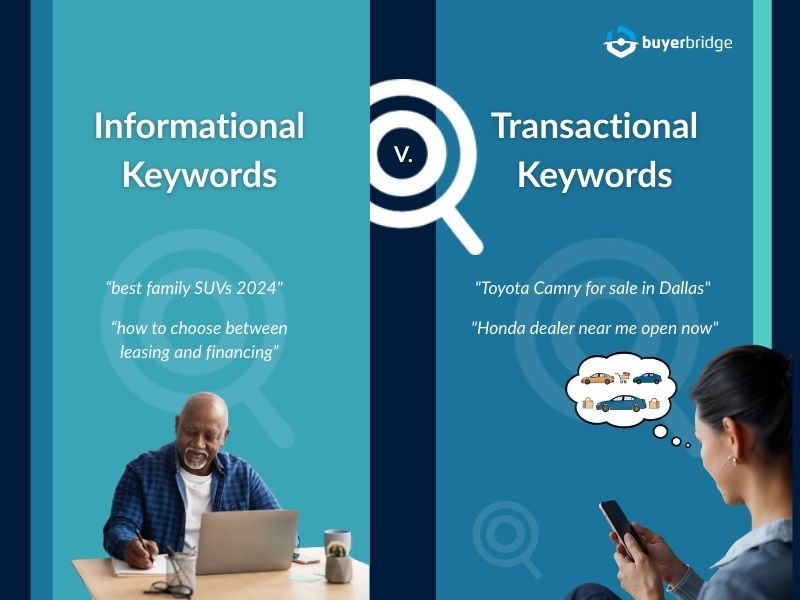
Informational vs. Transactional Keywords
Informational keywords show customers are learning and exploring. Phrases like “best family SUVs 2024” or “how to choose between leasing and financing” are early-stage research. These searches are chances to build trust and show your dealership as a helpful resource.
Transactional keywords indicate a buyer is ready to make a purchase. Searches like “Toyota Camry for sale in Dallas” or “Honda dealer near me open now” are high-intent. These should lead to inventory pages or conversion-focused landing pages.
Model-Specific Search Patterns
Customers searching for specific vehicles follow patterns. They use brand names, model names, years, trims, and features in different ways. Understanding these patterns helps create content that captures searches like “2024 Ford F-150 XLT crew cab” or “Lexus RX 350 luxury package features.”
Model-specific searches often include comparison terms. Buyers want to know how vehicles compare to competitors. This creates opportunities for comparison content that ranks well and guides purchase decisions.
Long-Tail Keywords for Dealership Success
Long-tail keywords are longer, more specific phrases. They drive highly qualified traffic to your website. While they have less search volume, they convert at much higher rates because they match specific customer needs. A phrase like “certified pre-owned Lexus RX 350 with third-row seating in Phoenix” brings fewer visitors but is more likely to convert.
Geographic Modifiers and Local Search Terms
Local search is key in the automotive industry. Most buyers want dealerships nearby. Geographic modifiers like “near me,” city names, and regional identifiers are essential. They help capture local search traffic.
We suggest building content around multiple geographic variations. Include your city, suburbs, and nearby towns. This geographic layering expands your reach while keeping your content local.
Feature-Based and Problem-Solution Keywords
Feature-based keywords address specific customer needs. Searches like “best trucks for towing” or “most fuel-efficient sedans under $30,000” show what matters to buyers. Content targeting these terms demonstrates expertise and attracts motivated customers.
Problem-solution keywords capture customers with specific concerns. “Safest vehicles for teen drivers” or “best cars for winter weather” address real concerns that influence purchase decisions.
Competitive Keyword Analysis in the Auto Industry
Looking at your competitors’ keyword rankings can reveal opportunities. Analyzing which terms drive traffic to competitors shows content gaps in your strategy. Tools like SEMrush or Ahrefs show where competitors rank and which keywords are most valuable.
Find underserved keywords where competition is lower but search intent is strong. These opportunities let you capture market share through strategic content targeting terms your competitors have overlooked. The Buyers Bridge approach focuses on finding these dealership-specific opportunities that align with your inventory and local market conditions.
3. Content Marketing for Automotive SEO: Core Principles
Every piece of dealership content should have a purpose in the customer’s journey. It must also meet search engine quality standards. Understanding how buyers move through their decision process is key. We create content that addresses real customer needs at each stage.
Random blog posts won’t help your dealership. Strategic content aligns with where customers are in their research and buying process. This approach builds trust and improves your search visibility.
Aligning Content with the Car Buyer Journey
Car buyers follow a predictable path from initial interest to final purchase. Your dealership seo writing strategy must map content to these distinct stages. Understanding this journey helps you create resources that meet customers exactly where they are.
Most automotive shoppers move through three key phases. Each phase requires different information and approaches. The table below shows how content types align with buyer needs.

Journey Stage
Buyer Mindset
Content Focus
Example Topics
Awareness Stage Content Topics
Early-stage buyers need educational resources that address broad questions. They’re not ready to buy yet, but want to understand their options. Create content that positions your dealership as a helpful expert.
Effective awareness content includes:
- Signs it’s time to replace your current vehicle
- Understanding different vehicle classes and segments
- Electric vehicles vs. hybrid technology explained
- Safety features comparison guides
- Fuel efficiency breakdowns by vehicle type
Consideration Stage Resources
Customers in this phase actively compare specific models and dealerships. They need detailed information to evaluate their choices. Your content should help them make informed decisions while showing your expertise.
Consideration content should feature:
- Head-to-head vehicle comparisons with specifications
- Detailed buying guides for specific segments
- Financing and lease option calculators
- Trade-in value estimation tools
- Total cost of ownership analyses
Decision Stage Conversion Content
Ready-to-buy customers need final reassurance about choosing your dealership. Address last-minute concerns and highlight what makes you different. This content directly drives conversions and appointments.
Decision stage topics include:
- Why buy from your specific dealership
- Current manufacturer incentives and rebates
- Available inventory with detailed specifications
- Customer testimonials and success stories
- Service department capabilities and warranties
Creating E-E-A-T Focused Automotive Content
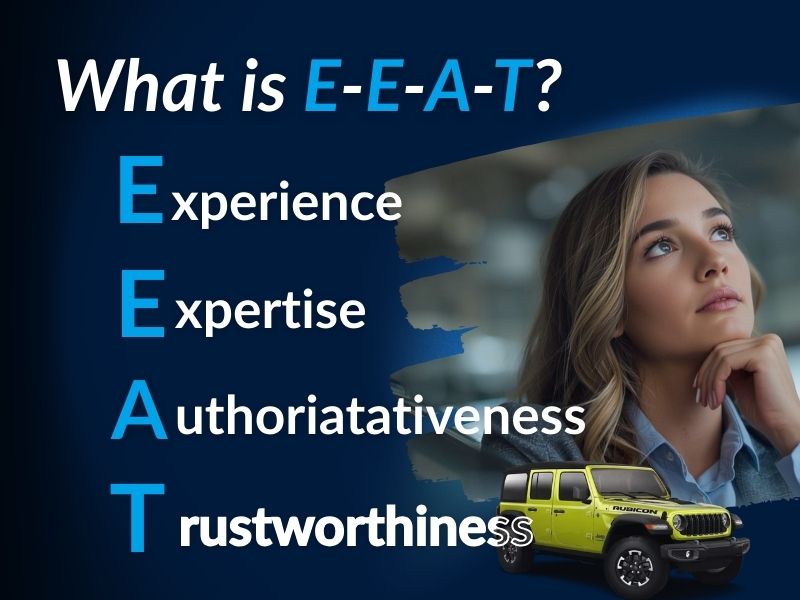
Google evaluates content quality using E-E-A-T principles: Experience, Expertise, Authoritativeness, and Trustworthiness. These factors significantly impact your search rankings. Quality dealership seo writing must demonstrate all four elements.
Experience shows through detailed vehicle knowledge and real-world insights. Share firsthand information about models you sell. Include photos from your lot and specific observations about vehicle performance.
Expertise comes from staff credentials and industry certifications. Feature content written by certified sales professionals or service technicians. Mention manufacturer training and years of experience in the automotive field.
Authoritativeness develops through resources and industry recognition. Create in-depth guides that cover topics thoroughly. Earn links from reputable automotive sources and local business organizations.
Trustworthiness requires transparent information and accurate details. Always provide honest comparisons, including any drawbacks. Display customer reviews prominently and keep all pricing information current and clear.
We’ve found that content meeting these standards ranks higher and converts better. It serves both search engines and your customers simultaneously. This dual benefit makes E-E-A-T principles essential for automotive marketing success.
4. Strategic Blog Content Development for Car Dealerships
Dealerships have seen their organic traffic triple by focusing on blog content. A well-thought-out blog turns your website into a valuable resource. It attracts buyers at every stage of their journey.
The key is to create content that answers real questions. It should also make your dealership the go-to local authority.
Successful content starts with knowing what customers search for. Your blog should address their concerns and guide them to making confident decisions.
Vehicle Comparison and Review Articles
Comparison content drives qualified traffic because customers research before buying. These articles catch buyers when they’re choosing between options.
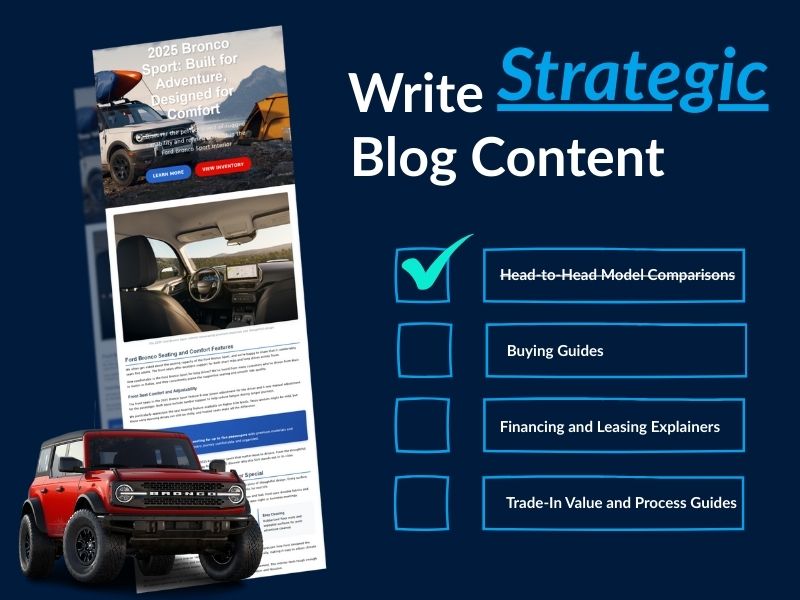
Head-to-Head Model Comparisons
Direct comparisons target specific search queries with high buying intent. For example, “2024 Honda CR-V vs. Toyota RAV4: Which SUV Is Right for You?” matches what customers search for.
Make these comparisons valuable. Include detailed specs, real-world performance, and honest assessments. Avoid purely promotional content to keep credibility.
Segment-Specific Buying Guides
Broader buying guides attract customers early in their research. They position your expertise across multiple manufacturers:
- Best Family Sedans Under $35,000
- Top Luxury SUVs for 2024
- Most Reliable Used Trucks in Your Price Range
- Best Electric Vehicles for Daily Commuting
These guides help customers understand their options. They naturally showcase your inventory.
Educational Content for First-Time Buyers
First-time buyers face knowledge gaps that cause anxiety. Educational content addresses these concerns and builds trust.
Financing and Leasing Explainers
Financial topics confuse many buyers and create search volume. Clear explanations attract traffic and position your dealership as a resource:
- Understanding APR: What It Means for Your Car Loan
- Leasing vs. Buying: Pros and Cons Explained
- How to Get Pre-Approved for Auto Financing
- What Credit Score Do You Need to Finance a Car?
Trade-In Value and Process Guides
Trade-in uncertainty stops many buyers. Detailed guides remove this barrier and capture informational search traffic.
Explain how trade-in evaluations work and what affects vehicle value. This transparency builds confidence and differentiates your dealership.
Seasonal and Trend-Based Automotive Topics
Timely content keeps your blog fresh and captures seasonal spikes. Create articles around predictable events and emerging trends:
- Preparing Your Vehicle for Winter Driving
- Best Summer Road Trip Vehicles
- New Electric Vehicle Models Coming in 2024
- Understanding the Latest Safety Technologies
This approach maintains consistent publishing momentum and stays relevant to current interests.
Maintenance and Ownership Guides
Maintenance content serves existing customers and attracts new visitors. These guides provide ongoing value that keeps customers returning.
Create resources like “Essential Maintenance Schedule for Your [Vehicle],” “How to Maximize Your Vehicle’s Resale Value,” or “Common Warning Lights and What They Mean.” These pieces show your commitment to customer success beyond the initial sale.
We help dealerships develop blog strategies that balance immediate lead generation with long-term authority building. The most effective content approaches this as a strategy, not just random publishing. Focus on creating genuinely helpful resources, and SEO results will follow naturally.
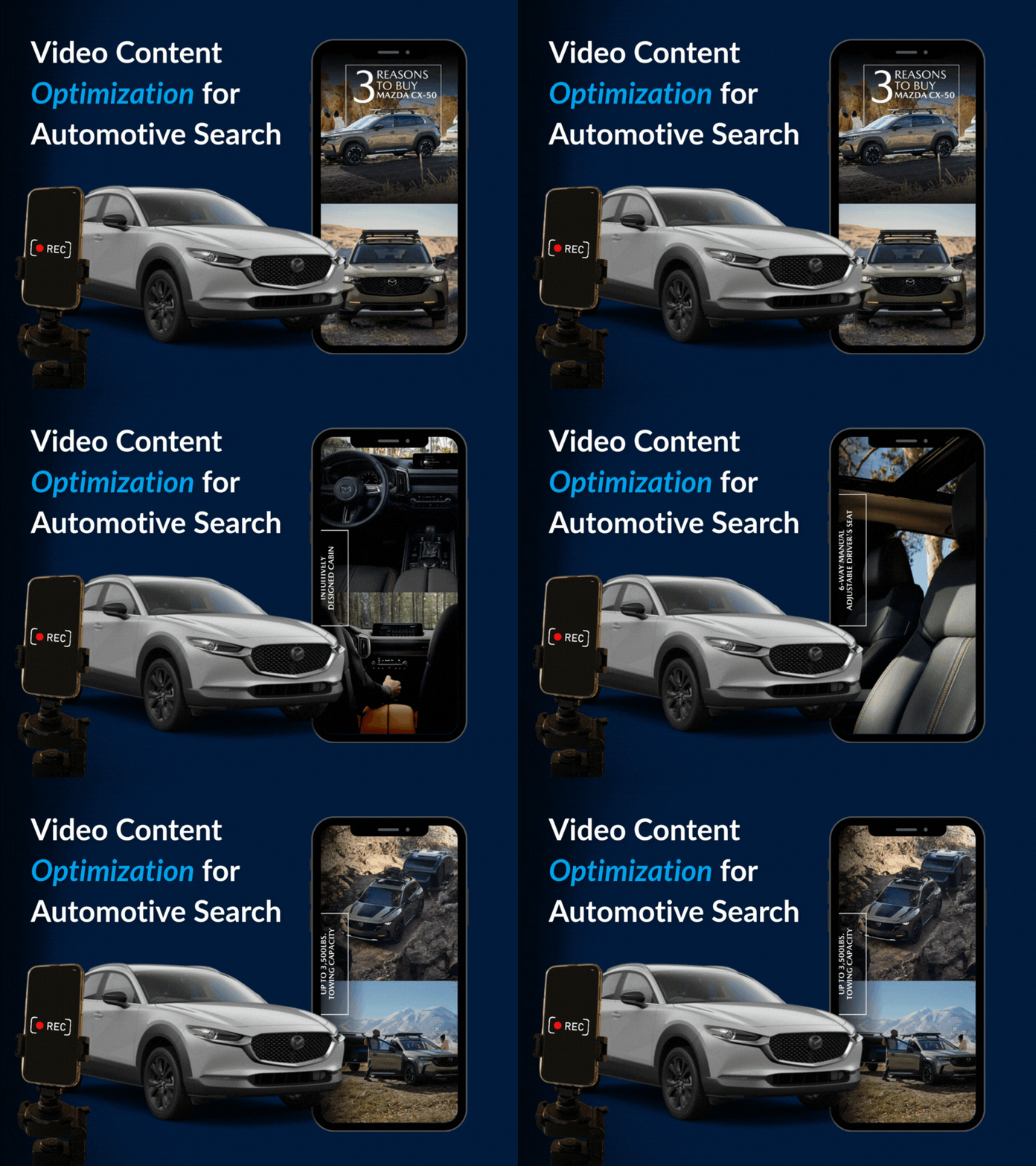
5. Video Content Optimization for Automotive Search
Video has become a key part of car buying today. Buyers want to see cars online before visiting dealerships. Search engines now put videos higher in search results.
Video builds trust by showing what buyers will get. This means customers know what they want before they visit. It saves time for everyone involved.
Vehicle Walkaround Videos and SEO Benefits
Walkaround videos are like digital showrooms. They work all the time to attract buyers. They show off specific cars and answer questions like “2024 Ford F-150 review” or “used BMW X5 features.”
These videos also help with SEO. They keep people on your page longer and show search engines your content is good. Dealers with lots of videos rank higher in local searches.
Structuring Effective Walkaround Content
Good walkaround videos follow a clear plan. Start with shots of the car from all sides. Then, show the inside, focusing on tech, comfort, and space.
Keep used car videos short, 3-5 minutes. New cars with lots of tech might need 5-8 minutes. Speak naturally and highlight features that matter to buyers.
Transcription and Closed Caption Optimization
Transcripts help search engines find your videos. Captions make videos more accessible and boost watch time. Most social media users watch videos without sound.
Upload full transcripts with your videos. This adds text that helps your videos rank for specific searches.
YouTube Optimization for Dealership Content
YouTube is the second-biggest search engine. Optimizing your content there boosts your marketing efforts a lot.
Use your YouTube channel like a video database. Organize videos by make, model, or type. This makes it easier for users and keeps them watching longer.
Title and Description Best Practices
Make titles include keywords but also be clear. “2024 Chevrolet Tahoe High Country – Full Walkaround and Feature Review” is better than “New SUV in Stock.”
Write descriptions that add value:
- Include specs and features in the first 150 characters
- Add timestamps for different video parts
- Link to the car’s page on your website
- Include your contact info and location
- Use hashtags and model-specific keywords
Thumbnail Design for Click-Through Rates
Good thumbnails are key to getting clicks. Show the car clearly from a nice angle with good light.
Add text overlays with important points—”4WD,” “Low Miles,” or “Loaded.” Use your dealership’s logo and colors in all thumbnails.
Video Schema Markup Implementation
Video schema markup helps search engines understand your videos. It can get your videos to show up in Google search results with thumbnails.
Add VideoObject schema to video pages. Include details like name, description, and duration. This boosts your video’s visibility and attracts more buyers.
Journey Stage
Buyer Mindset
Content Focus
Example Topics
6. Local Content Strategies for Dealership Visibility
Most car buyers start by searching for dealerships near them. This makes local content key for dealerships to succeed. When people search for “Toyota dealer near me” or “used trucks in Denver,” they’re looking to visit a showroom.
We’ve helped dealerships become leaders in their areas through local content. It’s not just about adding location names to content. It’s about making real connections with your community.
Creating Location-Specific Landing Pages
Location-specific landing pages help you reach customers in different areas. Each page should have unique content for a specific area. These pages are the base for your local search success.
City and Neighborhood Targeting
Make dedicated pages for each city or neighborhood you serve. A page for “Serving Round Rock, TX” should include directions and local landmarks. It should also have testimonials from local customers.
Include details that matter to local customers. Talk about the routes they’ll take to your dealership. Mention nearby shopping centers or major employers. This shows you really know the area.
Local Market Inventory Highlights
Connect your inventory to local needs. If you serve a mountain community, highlight all-wheel-drive vehicles before winter. When gas prices rise, feature fuel-efficient models.
Create content around your inventory that matches local search terms. If you have a lot of Silverado inventory, make content for “Chevrolet Silverado for sale in Austin.” This targets specific search traffic.
Community Event Coverage and Local Partnerships
Being involved in the community creates valuable content and builds authority. Covering events your dealership participates in creates shareable content. This earns backlinks from local organizations and news outlets.
Sponsorship Content Opportunities
Partnerships with local sports teams or charity events offer content opportunities. Create event recaps and photo galleries. These stories generate local interest and provide link-building chances.
Share photos from sponsored events. Write about the impact of your scholarship program. These stories connect with local customers and show your commitment to the community.
Local News and Updates Integration
Create content around local automotive news. Cover new traffic patterns, local auto shows, or state regulation changes. This makes your dealership a local information resource, not just a sales location.
Local Inventory Optimization
Optimize inventory pages for local search by adding location qualifiers. Instead of “2024 Honda Accord,” use “2024 Honda Accord for Sale in Phoenix, AZ.” This captures customers searching with location-specific intent.
Create blog content around your specific inventory availability. If you get a shipment of popular models, announce it with location-targeted content. This captures “in stock now” searches combined with your location.
Google Business Profile Content Integration
Your Google Business Profile often appears before your website in local search results. Post regular updates sharing blog content, adding events, and highlighting special inventory. This profile integration boosts your local visibility.
Encourage customer reviews through your Google Business Profile and respond to every review professionally. Review signals heavily influence local rankings and customer decisions. Strong SEO for car dealerships always includes active Google Business Profile management.
Ready to Launch Smarter?
If you’re ready to cut down setup time, boost performance, and finally scale without stress, it’s time to automate ad strategies with BuyerBridge.
Get more from your campaigns—without doing more work.